

A Partisan song
Here you can find how the song played a role in Jewish communities during World War II.
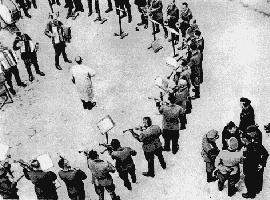
The emergence of an anthem
Brian Nedvin describes that the song was very quickly accepted and sung by the Jews of the Vilna Ghetto. From there the song spread over different ghettos and concentration camps. Making the song an anthem of the resistance. (Nedvin, 2005) Because of these evolutions, Zog nit Keynmol became a symbol of hope. Song played a big role in the feeling of community in concentration camps. Singing familiar songs enhanced this feeling. Zog nit Keynmol was a song that had a huge symbolic meaning for Jewish prisoners. The partisan hymn had spread accross Europe after the Warsaw uprising, and was well known. (Fackler, 2017)
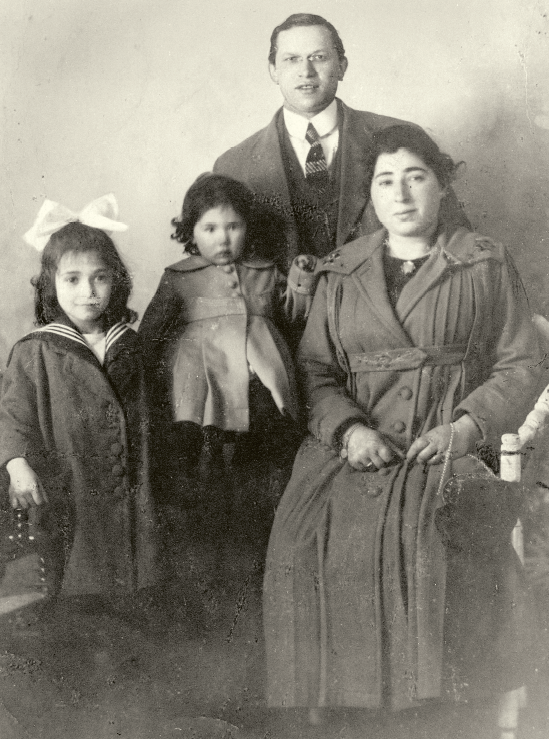
Rebekka Brilleslijper
One of the best examples of how widespread the partisan hymn had become, becomes apparent in the work of, and work about Rebekka (or Lien) Brilleslijper. Living in the Netherlands during the war, Rebekka Brilleslijper carried the stage name of Lin Jaldati under which she performed Yiddish songs. She survived the concentration camps in the east and her war experiences are transcribed in Sag nie, du gehst den letzten weg, written by her and her husband Eberhard Rebling. (Citroen page 380-381) In the translation of this survivor's story the translaters provide a statement about the rol that Zog nit Keynmol played in the lives of Lien and Eberhard. Proclaiming that, as Lin Jaldati, she sung it hundreds of times and that Zog nit Keynmol could be seen as the theme song of the lives of Rebekka and Eberhard. (Meijer, Oudesluijs, Spanjer, Stotijn, 2024) This story of Rebekka Brilleslijper illustrates how a song, made in a ghetto in Eastern Europe, had a continent-wide impact on the Jewish population.
Maak jouw eigen website met JouwWeb