

Lyrics and analysis of Zog nit keynmol
Zog nit Keynmol would become the most important song for Jewish resistance and hope. Here you can find what the song says and why it is so meaningful.
The Lyrics in Yiddish
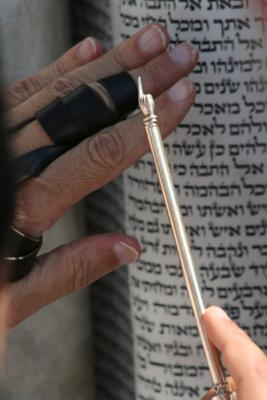
The original song was written and sang in Yiddish, a language spoken by Ashkenazi jews which is now endangered.
Zog nit keyn mol az du geyst dem letsn veg,
Khotsh himlen blayene farshteln bloye teg;
Kumen vet nokh undzer oysgebenkte sho,
S'vet a poyk ton undzer trot – mir zenen do!
Fun grinem palmen-land biz vaytn land fun shney,
Mir kumen on mit undzer payn, mit undzer vey,
Un vu gefaln s'iz a shprots fun undzer blut,
Shprotsn vet dort undzer gvure undzer mut.
S'vet di morgn-zun bagildn undz dem haynt,
Un der nekhtn vet farshvindn mitn faynt,
Nor oyb farzamen vet di zun un der kayor-
Vi a parol zol geyn dos lid fun dor tsu dor.
Dos lid geshribn iz mit blut un nit mit blay,
S'iz nit keyn lidl fun a foygl af der fray,
Dos hot a folk tsvishn falndike vent
Dos lid gezungen mit naganes in di hent.
A Translation in English
Never say this is the final road for you,
Though leadened skies may cover over days of blue.
As the hour that we longed for is so near,
Our step beats out the message – we are here!
From lands so green with palms to lands all white with snow,
We shall be coming with our anguish and our woe,
And where a spurt of our blood fell on the earth,
There our courage and our spirit have rebirth.
The early morning sun will brighten our day,
And yesterday with our foe will fade away
But if the sun delays and in the east remains –
This song as password generations must maintain.
This song was written with our blood and not with lead,
It’s not a little tune that birds sing overhead.
This song a people sang amid collapsing walls,
With grenades in hand they heeded to the call.
Therefore never say this is the final road for you,
Though leadened skies may cover over days of blue.
As the hour that we longed for is so near,
Our step beats out the message – we are here!
Source: Museum Of Jewish Hertiage. https://mjhnyc.org/blog/a-song-of-inspiration/
Analysis
This song clearly goes against the myth that the Jews were lead as lambs to the slaughter, but instead calls for resistance. It is a highly emotional text that tries to inspire the Jewish population to keep its head high by saying that the Jewish people should never say that this is their final road and that this horrible time will fade away together with the Nazi's (Our foe). Furthermore, the song even states that the moment the Jewish people have waited for is coming. I imagine that Glick hereby means the moment in which the skies of lead turn into skies of blue again and the Jewish folk will be able to live in peace.
It also calls for action against the oppressors. It especially does so in the sentences in the second verse:
Mir kumen on mit undzer payn, mit undzer vey,
Un vu gefaln s'iz a shprots fun undzer blut,
Shprotsn vet dort undzer gvure undzer mut.
(English translation seen above)
Here Glick states that the Jewish people will act out of pain and grief, and that every casualty is evidence of the bravery and courage of the Jews. Especially this sentence could've been an inspiration for Jewish resistance in the Vilnius Ghetto.
Finally, by ending the song in a powerful manner by proclaiming "We are here!", Glick calls for unity and hope of the Jewish People.
A contrafact song
Something that plays a big role in the song is the rhythm. If you listen to Zog nit keynmol it doesn't sound like a song of grief. When hearing it without the meaning it sounds catchy and uplifting. Not what you would expect when hearing a song that played a big role in the Holocaust. But there is a backstory behind this rhythm. As Alisa Tamar Forman explains in her study of contrafact music in the holocaust, the melody of Zog nit Keynmol has its origin from a Russian song called "To ne tuchi, grozovye oblaka". This song featured in a 1938 Soviet film to encourage the Soviet soldiers to fight and see that it will get better. (Forman, 2002) These are the same themes that Glick wants to highlight with his lyrics. In this light it makes sense why this particular melody was chosen.
A song of inspiration, hope & unity
One can only imagine how inspiring the lyrics of Glick must have been for the victims of the Shoah. Combined with the marching rhythm, it sounds like a war song of an oppressed people against the enemy. Zog nit Keynmol brings up emotions of hope and tries to make Jewish people living in the worst of times feel that this is not the end and that they will live to see the other side. It is admirable that Glick was able to produce such an uplifting song during a time of unseen destruction by rejecting the downfall of the Jewish people. Glick seems to direct this song to the entirety of the Jewish people. In Music in the Holocaust: Confronting Life in the Nazi Ghettos and Camps, Shirli Gilbert hypothesizes that many of the songs sung by Jewish partisans such as this song were purposefully broad in their texts. She argues that the 'we' in the song is not only directed to Jewish partisans, but is mostly directed to the collective. (Orlovsky-Schnitzler, 2022) Placing in in a larger context of Jewish suffering and experience.
Maak jouw eigen website met JouwWeb